IGI Certified Lab-Grown Diamonds in Delhi: How to Verify Before You Buy

Ask any Delhi jeweller for a “certified” diamond and you’ll almost always hear “IGI.” But here’s the problem: most buyers never actually check what that certificate says, whether it matches the stone in front of them, or how to confirm it’s genuine. If you’re about to buy a lab-grown diamond — for an engagement ring, a gift, or an addition to your collection — knowing how to verify IGI certification isn’t optional. It’s the difference between buying with confidence and buying blind.
Quick Answer
An IGI (International Gemological Institute) certificate for a lab-grown diamond confirms the stone’s growth method, carat weight, cut, colour, and clarity, along with a unique report number. To verify it, match the report number on the certificate with the number laser-inscribed on the diamond’s girdle, and cross-check the details on IGI’s official online verification portal before purchasing.
What Is IGI Certification for Lab-Grown Diamonds?
IGI is one of the gemological laboratories that grades and certifies diamonds — both natural and lab-grown. For a lab-grown diamond, the IGI report documents the growth method (CVD or HPHT), along with the standard 4Cs: cut, colour, clarity, and carat weight. It’s essentially an independent, third-party record of what you’re actually buying, separate from what the seller tells you.
It’s worth noting: an IGI certificate confirms a diamond’s characteristics as graded at a point in time — it doesn’t guarantee the seller’s price is fair or that every certified stone is of identical quality. Two IGI-certified diamonds with different grades can vary significantly in appearance and value.
Why Certification Verification Matters
A certificate is only useful if it’s genuine and if it actually belongs to the diamond you’re being shown. Certification fraud isn’t common, but mismatched or altered reports do happen, especially with loose stones bought without proper documentation. This is also why choosing a reliable CVD diamond store matters as much as the certificate itself — a trustworthy seller will encourage verification rather than discourage it. Verifying the certificate protects you in a few concrete ways:
- Confirms the diamond’s actual specifications match what you’re paying for
- Gives you a reference point if you ever want to resell, exchange, or insure the piece
- Protects you from being sold an uncertified or mismatched stone as “certified”
- Provides a paper trail for warranty, exchange, or after-sales support
How IGI Certification Works
Every IGI-certified diamond above a certain size is typically laser-inscribed with a unique report number on its girdle (the thin edge between the top and bottom of the stone). This inscription is microscopic and usually requires a jeweller’s loupe or microscope to read.
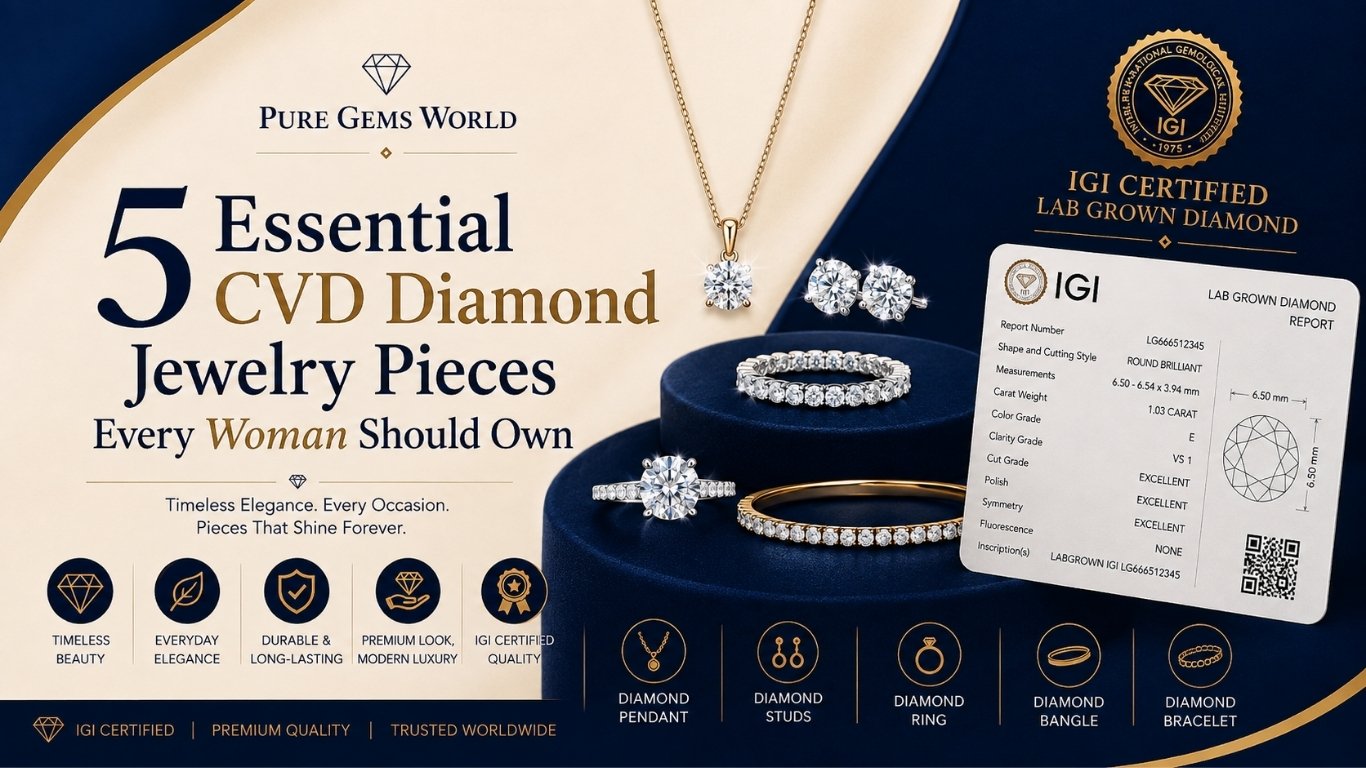
The report itself lists:
- Report number
- Carat weight
- Measurements
- Cut, colour, and clarity grades
- Growth method (CVD or HPHT) for lab-grown stones
- Polish and symmetry
- Fluorescence (if any)
Step-by-Step: How to Verify an IGI Certificate Before You Buy
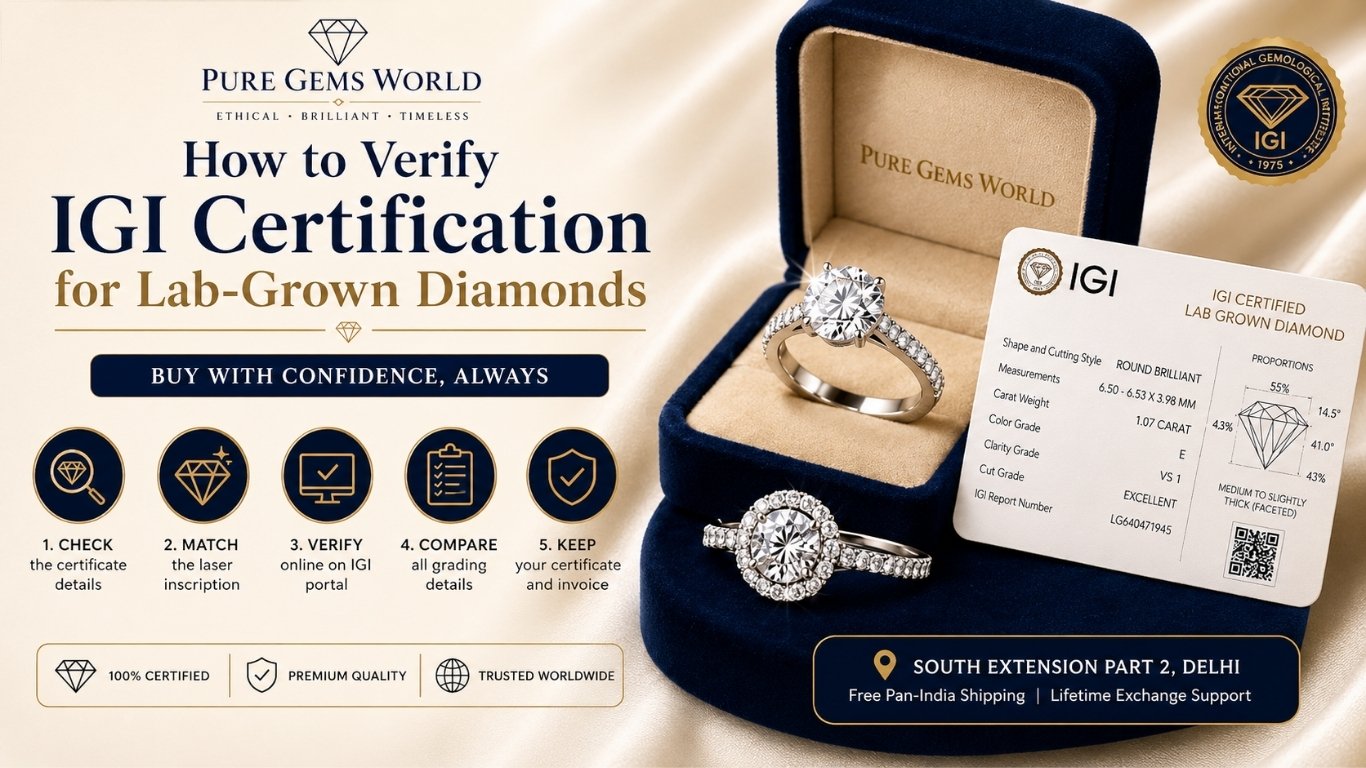
- Ask for the physical or digital IGI report before finalising the purchase — not after.
- Locate the report number printed on the certificate.
- Check the laser inscription on the diamond’s girdle using a jeweller’s loupe; ask the seller to show you under magnification if you can’t see it yourself.
- Match the inscribed number to the report number — they should be identical.
- Visit IGI’s official verification page and enter the report number to confirm the certificate exists in their database and matches the details you’ve been given.
- Compare the grading details (carat, cut, colour, clarity) on the digital record with what’s printed on your physical certificate.
- Keep a copy of the certificate and your purchase invoice together for future reference, exchange, or resale.
IGI vs GIA for Lab-Grown Diamonds
Buyers often ask which certification is “better.” Both are recognised gemological laboratories, but they have different histories and grading approaches.
| Factor | IGI | GIA |
|---|---|---|
| Focus on lab-grown diamonds | Widely used and well established for lab-grown stones | Also certifies lab-grown, historically more associated with natural diamonds |
| Availability in India | Commonly used by Indian jewellers, including for lab-grown stones | Available but less commonly the default for lab-grown diamonds in India |
| Report contents | 4Cs, growth method, inscription details | 4Cs, growth method, inscription details |
| Verification | Online report check via IGI portal | Online report check via GIA portal |
Neither certification inherently means a “better” diamond — the actual grade (cut, colour, clarity, carat) determines quality and value, not just which lab issued the report.
Important Factors Buyers Should Check
Beyond the certificate itself, a few details help you evaluate the actual diamond:
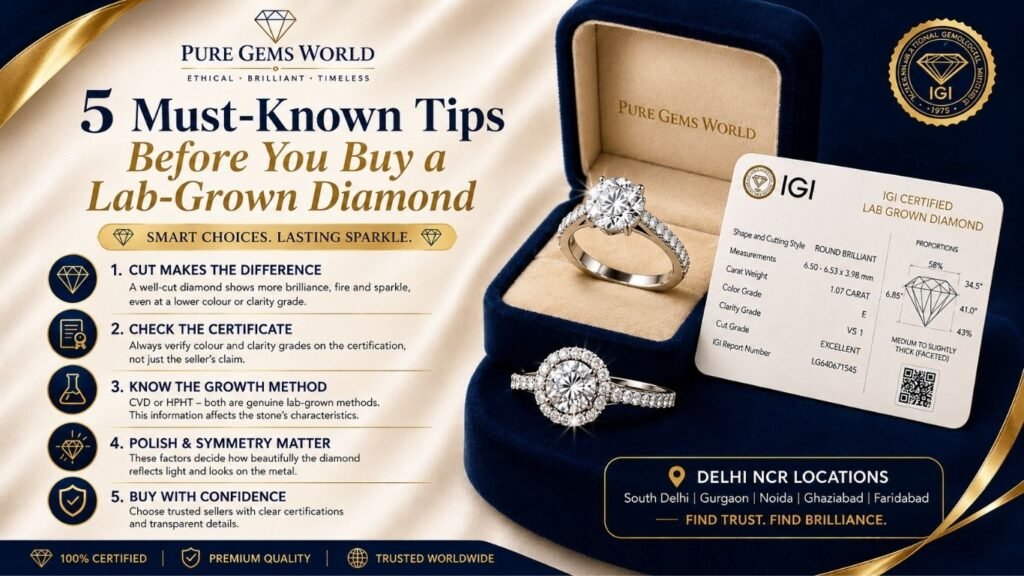
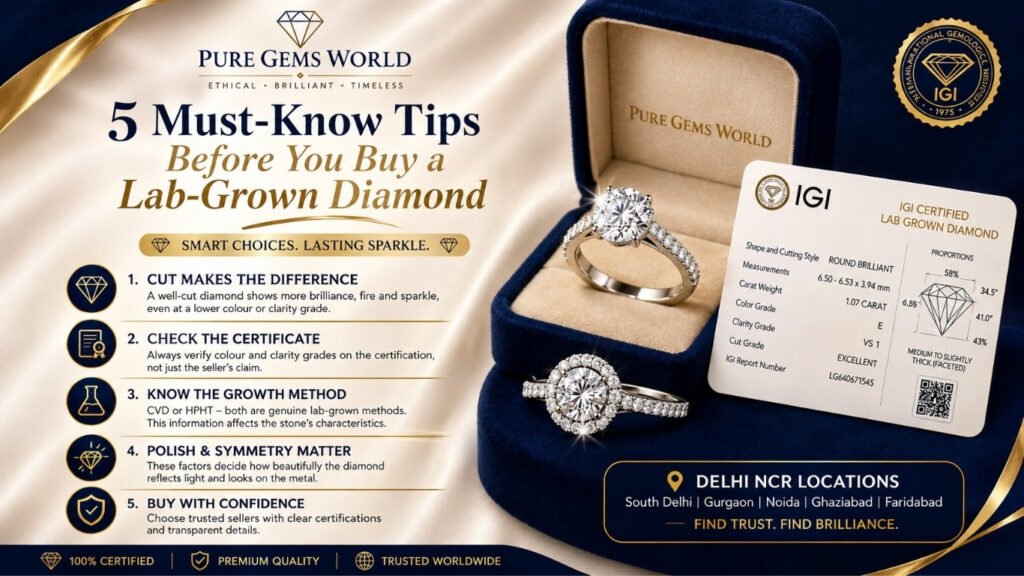
- Cut affects brilliance and fire more than any other factor — a well-cut stone will look livelier even at a lower colour or clarity grade.
- Colour and clarity grades should be checked against the certificate, not just taken on the seller’s word.
- Growth method (CVD or HPHT) should be clearly stated; this affects certain characteristics but not whether the stone is a genuine diamond.
- Polish and symmetry influence how light performs across the stone’s surface.
- Setting compatibility — if buying loose, confirm the diamond’s measurements suit your intended jewellery design.
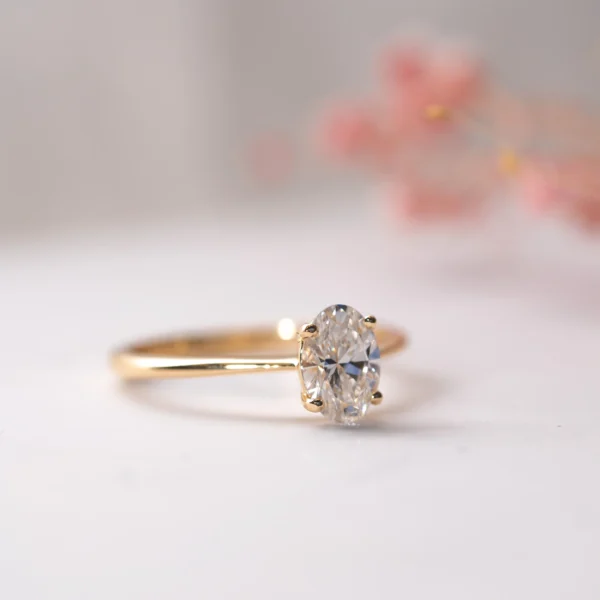
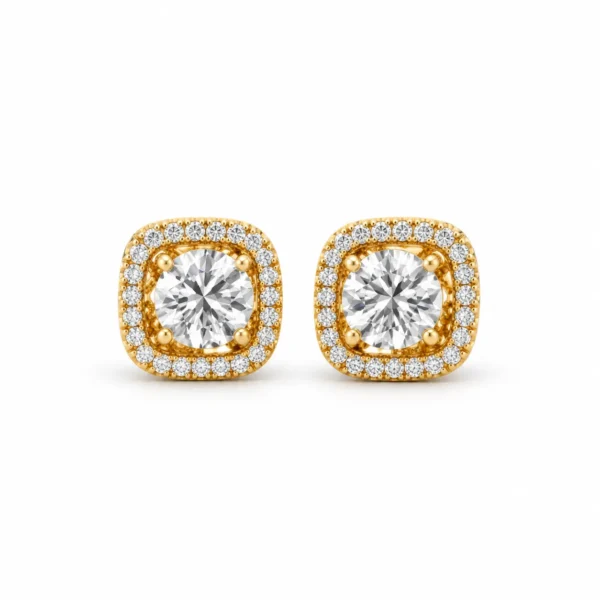
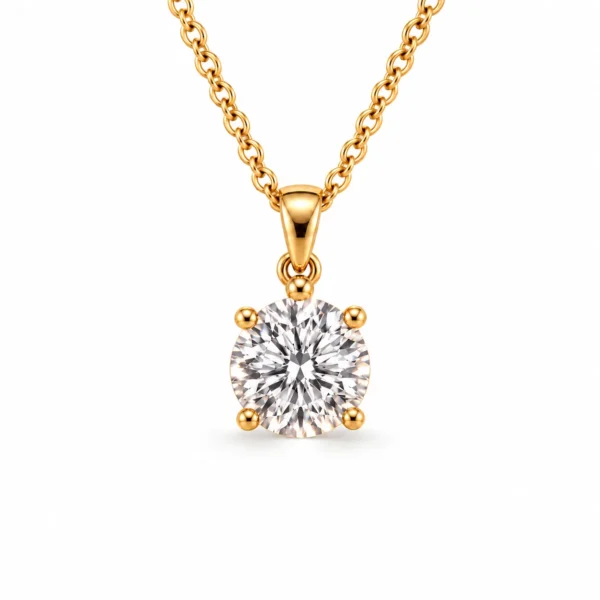
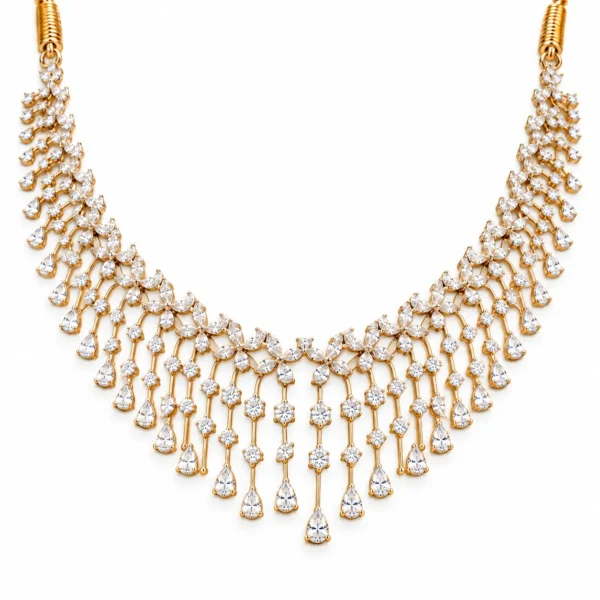
Choosing the Right CVD Diamond Store
Certification checks work best when paired with a store that supports transparency rather than resisting it. When evaluating a CVD diamond store — whether in person in Delhi or online — look for a few practical signs:
- The store willingly shows you the certificate before you commit, not after payment
- Staff can explain the growth method, grading, and inscription without hesitation
- Loose lab grown diamonds for sale are backed by individual IGI reports, not a general claim of “all our stones are certified”
- Return, exchange, or after-sales policies are clearly stated upfront
An affordable CVD diamond store isn’t necessarily a compromise on quality — pricing differences often come down to overheads, sourcing, and specific stone specifications rather than certification standards. The safer approach is comparing verified, like-for-like stones across a few reliable stores rather than choosing based on price alone.
Price & Value Considerations
Lab-grown diamond prices vary based on carat weight, cut quality, colour, clarity, shape, and current market conditions — there’s no single fixed price per carat that applies universally. Certification itself may involve a small associated cost that can factor into final pricing, but it primarily exists to document quality, not to set price. When comparing quotes from different sellers in Delhi, always compare diamonds of matching or near-matching specifications rather than price alone.
Common Mistakes to Avoid
- Not asking for the certificate before purchase — verify it as part of your decision, not as an afterthought.
- Assuming all “certified” diamonds are equal — grades within a certificate matter more than the certificate’s existence alone.
- Skipping the online verification step — a printed certificate should always be cross-checked digitally.
- Buying loose stones without checking the laser inscription — this is your main proof the certificate belongs to that specific diamond.
- Not keeping documentation — retain your certificate and invoice together for any future exchange or resale conversation.
Expert Buying Tips
- Always request to see the diamond under magnification alongside its certificate.
- Cross-check the report number online yourself rather than relying solely on the seller’s confirmation.
- Ask the jeweller directly about the growth method and grading details in plain language.
- If buying jewellery (not a loose stone), confirm whether the certificate is for the diamond itself or the finished piece.
- Keep certification and purchase documentation together — this supports any future exchange, valuation, or resale conversation.
Frequently Asked Questions (FAQs)
What is IGI certification for diamonds?
IGI certification is an independent grading report issued by the International Gemological Institute, documenting a diamond’s carat, cut, colour, clarity, and — for lab-grown stones — growth method.
How do I verify an IGI certificate?
Match the report number on the certificate to the laser inscription on the diamond, then confirm the details using IGI’s official online report verification tool.
Is IGI as reliable as GIA?
Both are established gemological laboratories with their own grading standards. Reliability depends on following proper grading protocols, which both maintain, rather than one lab being universally “better.”
Can IGI certificates be faked?
Certificate fraud is uncommon but not impossible, which is why verifying the report number online and checking the laser inscription is an important buying step.
How much does IGI certification cost?
Certification costs can vary and are typically factored into the seller’s overall pricing rather than charged separately to the buyer at the point of sale.
Where can I check my diamond’s IGI report online?
IGI maintains an official online verification portal where you can enter your report number to confirm its details.
Do all lab-grown diamonds come certified?
Not automatically — always confirm with the seller whether certification is included, and request the report before finalising your purchase.
What is a laser inscription on a diamond?
It’s a microscopic engraving on the diamond’s girdle, usually matching the certificate’s report number, used to link a specific stone to its grading report.
Why is certification important when buying lab-grown diamonds?
It gives you an independent record of the diamond’s actual specifications, supporting informed buying decisions, resale conversations, and after-sales matters like exchange or insurance.
Final Verdict
IGI certification is a valuable tool for verifying what you’re actually buying — but only if you take the extra few minutes to check the report number, match the laser inscription, and confirm the details online. Whether you’re buying loose stones or finished jewellery in Delhi, this simple verification habit protects your purchase far more than assuming “certified” is enough on its own.
Looking to buy with confidence? Explore IGI certified lab-grown diamonds, browse loose lab-grown diamonds for sale, or view lab-grown diamond rings at Pure Gems World, South Extension Part 2, Delhi — with free Pan-India shipping and lifetime exchange support.