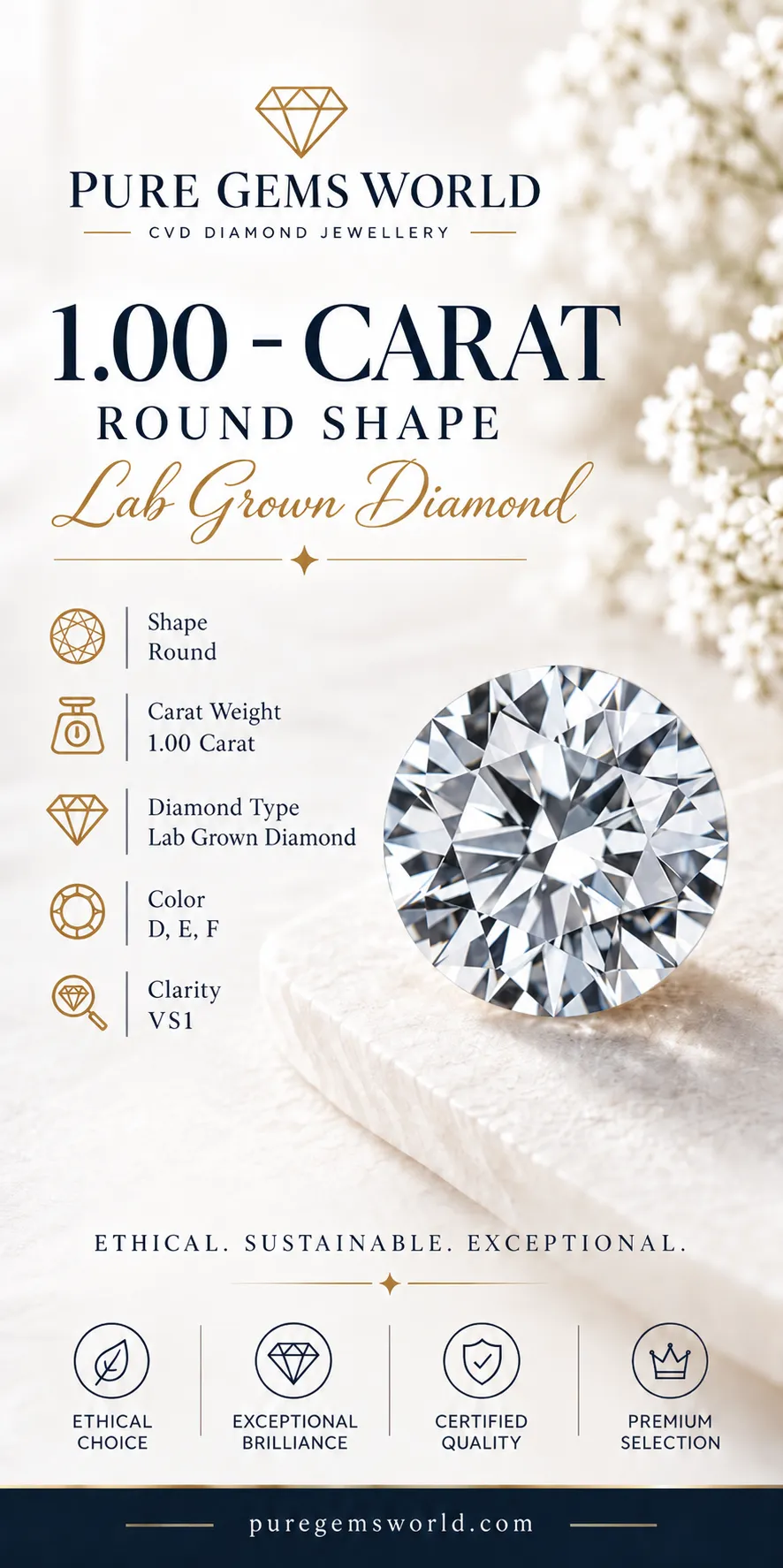
What Are the 4Cs of a CVD Diamond? How to Choose the Best One


A diamond can look stunning in a jewelry-store display and still be the wrong choice for your budget, style, or expectations. The challenge becomes even greater when you start comparing CVD diamonds and see a long list of grades, measurements, certificates, and prices.
That is exactly why understanding the 4Cs of a CVD diamond matters. The 4Cs—Cut, Color, Clarity, and Carat Weight—are the fundamental characteristics used to evaluate diamond quality. Instead of focusing only on carat size or price, these four factors help buyers compare diamonds more accurately.
However, the best CVD diamond is not always the one with the highest grade in every category. Rather, the smartest purchase is usually the stone that balances appearance, quality, certification, personal preference, and budget.
In this guide, we’ll break down every C of a CVD diamond and turn confusing grading information into a practical buying strategy.
What Is a CVD Diamond?
CVD (Chemical Vapor Deposition) diamonds are laboratory-grown diamonds created through a controlled process that allows diamond crystals to grow inside a laboratory environment. Unlike mined diamonds, they are produced without traditional diamond mining.
It’s important to understand that the term “CVD” refers to the growth method rather than the quality of the diamond. Just like natural diamonds, CVD diamonds are evaluated using the 4Cs—Cut, Color, Clarity, and Carat Weight.
As a result, two CVD diamonds with the same carat weight may look completely different depending on their cut, color, clarity, proportions, and overall craftsmanship. Therefore, buyers should review the complete 4C profile along with a reliable grading report instead of comparing diamonds based only on weight or price.

What Are the 4Cs of a CVD Diamond?
The 4Cs of a CVD diamond are:
- Cut — how effectively the diamond’s proportions and facets interact with light
- Color — the degree of color present in the diamond
- Clarity — the presence and visibility of inclusions and blemishes
- Carat — the diamond’s weight, not its physical size alone
The Gemological Institute of America defines the 4Cs as Color, Clarity, Cut, and Carat Weight. Each C tells you something different.
1. Cut: The C That Creates the Sparkle
If you want a CVD diamond that immediately catches the eye, start with the cut.
Many first-time buyers mistakenly think cut means the diamond’s shape. In reality, these are two different things.
The round, oval, pear, emerald, cushion, or princess designation describes the diamond’s shape. By contrast, cut refers to how well the diamond has been proportioned, faceted, and polished to interact with light.
Because of this, a well-cut diamond appears brighter, more lively, and full of sparkle. On the other hand, a poorly cut diamond can look dull even if it has an impressive carat weight.
According to GIA, cut has a significant influence on brightness, scintillation, and fire. For this reason, it is often considered the most visually important characteristic when purchasing a diamond.
2. Color: How White Should Your CVD Diamond Be?
Next, let’s talk about color.
Diamond color is slightly counterintuitive. Generally, the traditional D-to-Z grading scale measures the amount of color present in a diamond. D represents a colorless diamond, while color becomes increasingly visible toward Z.
Fortunately, the differences between adjacent grades are often subtle to the naked eye. Because of this, buyers can sometimes save money without sacrificing noticeable beauty.
If you want an icy-white appearance, a D–F diamond may be ideal. However, if you’re looking for the best balance between appearance and value, a well-selected G–J diamond can be an excellent choice.
3. Clarity: Does a Higher Grade Always Mean a Better Diamond?
Moving on, clarity refers to the internal inclusions and external blemishes found within a diamond.
GIA uses a standardized clarity grading system that ranges from Flawless to Included. Even so, the clarity grade doesn’t always reflect what you can actually see during everyday wear.
For example, many diamonds contain inclusions that are visible under 10× magnification but appear perfectly clean to the naked eye.
Therefore, don’t assume you always need VVS or Flawless clarity. Instead, choose an eye-clean diamond that offers the best balance of beauty and value.
4. Carat: Bigger Doesn’t Always Mean Better
Finally, let’s discuss carat weight.
Carat is often the first specification shoppers notice. However, carat measures weight—not the visible size of the diamond.
One metric carat equals 0.2 grams. Even though two diamonds may have the same carat weight, they can appear very different because of their cut and proportions.
For instance, a 0.90-carat diamond with an excellent cut may look brighter and even appear larger than a poorly cut 1.00-carat diamond.
Therefore, don’t judge a diamond by carat weight alone.
Which 4C Is Most Important?
There isn’t a single answer that works for everyone.
Nevertheless, many experts recommend starting with the following order:
- Cut
- Color
- Clarity
- Carat
This is because cut has the greatest impact on sparkle and overall beauty.
However, your priorities may differ. Buyers looking for a bold statement ring often prioritize carat weight. Meanwhile, customers seeking a bright white appearance usually focus more on color. Likewise, step-cut diamonds often require greater attention to clarity because their larger facets reveal inclusions more easily.
What is the best color for a CVD diamond?
There is no universal answer.
If you want an icy, highly colorless appearance and your budget allows it, a D–F diamond may be attractive. If you’re looking for a balance between appearance and value, a well-selected near-colorless diamond may provide an excellent compromise. This is especially important when the diamond is being placed in a setting that can influence how much body color you perceive.
Don’t automatically pay for D color
One of the most common buying mistakes is assuming that D is always the smartest choice.
Ask yourself:
Can you actually see a meaningful difference between the grades you’re considering?
If the visual difference is minimal but the price difference is substantial, you may prefer to put some of that budget toward a better cut, larger carat, or a setting you love.
3. Clarity: Does a Higher Grade Always Mean a Better Diamond?
Clarity refers to internal characteristics called inclusions and external characteristics called blemishes. The standard clarity scale includes grades ranging from Flawless and Internally Flawless through various levels of included characteristics. GIA explains that higher clarity grades indicate fewer or less visible inclusions and blemishes under standardized examination. But here’s where smart shopping comes in. A clarity grade is not exactly the same thing as what you see with your naked eye. A diamond may have inclusions visible under 10× magnification but still appear clean during normal wear.
What is an eye-clean CVD diamond?
An eye-clean diamond generally means that noticeable inclusions aren’t readily visible to the unaided eye from normal viewing distances. This is an important concept because many buyers automatically chase VVS or flawless clarity without asking whether that extra clarity is actually visible. For a round brilliant diamond, a well-selected VS-range stone may offer a strong combination of appearance and value, depending on the individual diamond. However, don’t choose a clarity grade blindly. Two diamonds with the same clarity grade can have very different inclusion patterns.
What should you inspect?
Look at:
- Location of inclusions
- Size of inclusions
- Number of inclusions
- Contrast
- Whether inclusions affect transparency
- Whether the inclusions are visible without magnification
- Shape and faceting of the diamond
A dark inclusion near the center may attract more attention than a small, less noticeable inclusion near the edge.
Clarity buying rule
Choose the lowest clarity grade that still looks clean and beautiful to you—not automatically the highest grade available.
That can help you allocate more of your budget toward characteristics that have a stronger visual impact.
4. Carat: Bigger Doesn’t Always Mean Better
Carat is often the first number shoppers notice.
But carat measures weight, not simply how large a diamond looks.
One metric carat equals 0.2 grams, and a carat is divided into 100 points. GIA also emphasizes that two diamonds with the same carat weight can have different values because of differences in cut, color, and clarity.
That distinction is critical.
Imagine two CVD diamonds:
Diamond A: 1.00 carat, weaker proportions
Diamond B: 1.00 carat, excellent proportions and strong light performance
They have the same weight, but they may not look equally impressive.
Now consider a second comparison:
Diamond C: 1.00 carat
Diamond D: 0.90 carat with excellent cut and proportions
Depending on the shape and dimensions, Diamond D may appear surprisingly substantial while delivering better sparkle.
Should you prioritize carat?
That depends on your goal.
Buyers who value a larger-looking diamond should pay closer attention to carat weight and physical measurements. On the other hand, those who love maximum sparkle should place greater emphasis on cut quality. For the most balanced purchase, consider carat alongside cut, color, clarity, and the stone’s actual proportions.
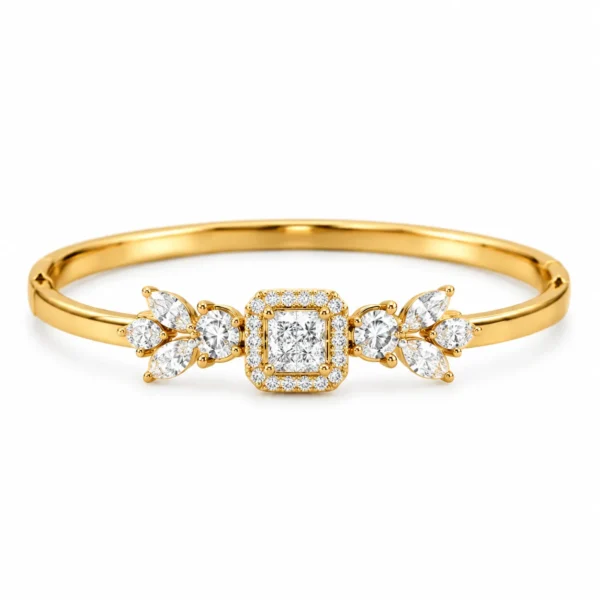
Which of the 4Cs Is Most Important for a CVD Diamond?
However, for many shoppers, a practical starting point is:
1. Cut
2. Color
3. Clarity
4. Carat
Because a diamond’s visual performance can be heavily influenced by how it is cut. GIA specifically describes cut as a major factor in brightness, fire, and scintillation.
But this isn’t a rigid rule.
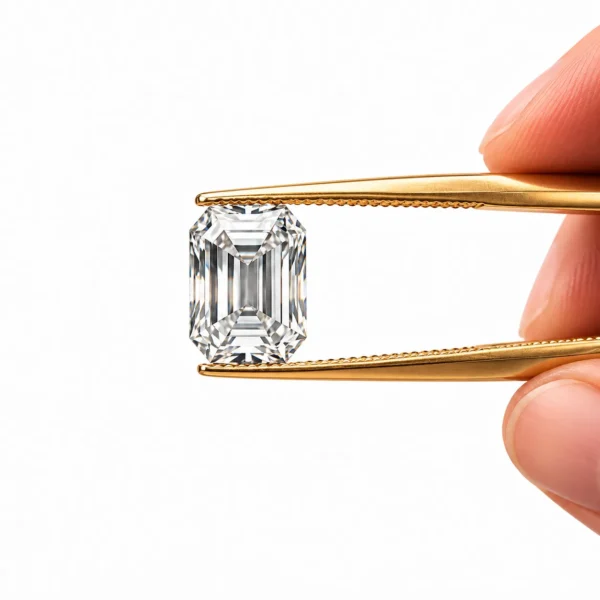
Buyers looking for a bold statement ring often place carat weight at the top of their priority list. Meanwhile, customers who prefer an icy-white appearance usually focus more on color grade. For step-cut diamonds, paying extra attention to clarity is worthwhile because the larger facets can make inclusions easier to notice.
How to Choose the Best CVD Diamond: Step-by-Step
Now let’s turn the theory into a buying process.
Step 1: Set Your Total Budget
Start with your overall budget, including:
- Diamond
- Setting
- Metal
- Customization
- Certification
- Taxes and other applicable costs
A realistic budget prevents you from over-prioritizing one C.
Step 2: Choose Your Diamond Shape
Decide whether you prefer:
- Round
- Oval
- Cushion
- Emerald
- Pear
- Radiant
- Princess
- Marquise
- Asscher
- Heart
Shape influences how the diamond looks on the finger and how its proportions should be evaluated.
Step 3: Prioritize Cut and Visual Performance
- If sparkle is important to you, investigate cut carefully.
- Don’t rely exclusively on one number.
- Review the grading information, proportions, symmetry, polish, and available photographs or videos.
- When possible, examine the diamond in more than one lighting environment.
- GIA recommends looking at diamond options in different lighting conditions and considering the 4Cs alongside your budget and personal preference.
Step 4: Choose a Practical Color Range
- Decide how color-sensitive you are.
- If you’re trying to maximize value, compare adjacent color ranges rather than automatically selecting the highest grade.
- For example, compare colorless and near-colorless stones visually before deciding whether the higher grade is worth the added cost to you.
Step 5: Select Your Ideal Carat Weight
Once you’ve established cut, color, and clarity priorities, choose the carat weight that fits your budget and style.
Remember:
Carat weight is not the same as visual size.
Step 6: Verify the Grading Report
Before buying, review the diamond’s grading documentation.
A laboratory report can help you confirm important information about the stone. IGI’s laboratory-grown diamond reporting process includes origin identification and, where applicable, 4Cs assessments, along with information such as shape, cutting style, and measurements.
Look for consistency between:
- Report details
- Diamond listing
- Measurements
- Inscription information, where applicable
- Seller’s description
Step 7: Check Whether Treatments Are Disclosed
Don’t stop at the 4Cs.
Ask whether the diamond has undergone any treatments and whether those are disclosed in the documentation.
IGI notes that its laboratory-grown diamond reports can include the growth process used and treatments in the report comments when applicable.
For buyers, transparency matters.
Step 8: Compare Similar Diamonds
Once you’ve shortlisted a diamond, don’t purchase immediately.
Compare it against at least a few stones with similar:
- Shape
- Carat
- Color
- Clarity
- Cut characteristics
- Measurements
- Certification
- Price
This can reveal whether you’re getting genuine value or simply paying more for a particular grade.
The Best 4C Combination for a CVD Diamond
There is no single combination that works for everyone. But a value-oriented buyer might prioritize:
Luxury-focused buyers often choose a combination of exceptional cut, higher color grades, superior clarity, and a substantial carat weight. In contrast, shoppers who prioritize size may prefer a larger carat while selecting practical color and eye-clean clarity grades. Ultimately, the best CVD diamond is the one that offers the right balance of beauty, quality, and value instead of chasing perfection in every category.
Common CVD Diamond Buying Mistakes
Mistake 1: Buying Based Only on Carat
A large diamond with poor visual performance may not look as impressive as a slightly smaller, well-cut stone.
Mistake 2: Automatically Choosing D Color
Higher color grades can be valuable, but the visual difference may not justify the additional cost for every buyer.
Mistake 3: Paying Too Much for Clarity
If a diamond is eye-clean, extremely high magnification grades may not create a visible benefit for everyday wear.
Mistake 4: Ignoring Cut
This can be one of the biggest mistakes.
Cut directly influences the way a diamond interacts with light, so a high carat number cannot compensate for weak visual performance.
Mistake 5: Ignoring the Report
A beautiful photograph is not enough.
Review the grading report and make sure the stone you’re receiving matches the documentation.
Mistake 6: Assuming Every CVD Diamond Is Identical
CVD is a growth method, not a quality grade.
The final quality of one stone can differ substantially from another.
Mistake 7: Choosing a Diamond Without Comparing It
The first attractive diamond you see may not be the best value.
Comparison shopping is especially important when several stones have similar specifications.
Expert Tips for Choosing a Better CVD Diamond
Tip 1: Buy With Your Eyes, Not Just the Certificate
A report gives you objective information, but the diamond’s actual appearance matters.
Tip 2: Prioritize the Characteristics You Can See
If you’re choosing between a higher clarity grade and better cut, ask which difference you can actually observe.
Tip 3: Check Measurements
Two stones with identical carat weights can have different dimensions.
Tip 4: Consider the Jewelry Setting
A diamond’s setting can affect how much color or inclusions you notice.
Tip 5: Don’t Treat “Highest Grade” as “Best Value”
The highest grade is not automatically the best choice for your needs.
Tip 6: Compare Price After Comparing Specifications
Start with quality, then compare prices among stones with similar characteristics.
Tip 7: Buy From a Transparent Seller
A reputable seller should clearly explain the diamond’s origin, grading documentation, treatments where relevant, and return or exchange terms.
A Simple Example: Choosing Between Three CVD Diamonds
Imagine your budget allows you to consider three diamonds.
Option A
- 1.00 carat
- D color
- VVS1 clarity
- Good visual performance
Option B
- 1.00 carat
- G color
- VS1 clarity
- Excellent visual performance
Option C
- 0.90 carat
- F color
- VS2 clarity
- Excellent visual performance
Many first-time buyers are naturally drawn to Option A because its grades appear more impressive on paper. However, experienced buyers often choose Option B or Option C when they provide better sparkle and overall value for the same budget. This comparison highlights an important lesson: the ideal CVD diamond is the one that matches your priorities, offers excellent visual performance, and provides the best value rather than simply having the highest grades.
CVD Diamond 4Cs Quick Buying Checklist
Before buying, ask:
What is the diamond’s shape?
What is its carat weight?
What is its color grade?
What is its clarity grade?
What is its cut grade, where applicable?
How are its proportions and symmetry?
Does it look eye-clean?
Does it appear bright and lively?
What are its exact measurements?
Is there a reputable grading report?
Does the report identify the diamond as laboratory-grown?
Are applicable treatments disclosed?
Does the stone fit my budget?
Have I compared it with similar diamonds?
Does the seller offer clear return or exchange terms?
Frequently Asked Questions About CVD Diamond 4Cs
1. What are the 4Cs of a CVD diamond?
The 4Cs are Cut, Color, Clarity, and Carat Weight. Cut describes how the diamond’s proportions and facets affect light performance, color measures the degree of color, clarity evaluates inclusions and blemishes, and carat weight measures the diamond’s weight.
2. How do you choose a good CVD diamond?
Start by setting a budget, then prioritize cut and visual appearance. After that, choose a practical color and eye-clean clarity grade before selecting the carat weight that fits your preferences. Finally, verify the grading report and compare similar stones.
3. Is CVD diamond quality the same as natural diamond quality?
The 4Cs are useful for evaluating both, but CVD and natural diamonds have different origins. A CVD diamond is laboratory-grown, while a natural diamond is mined. The diamond’s origin should be clearly represented in its documentation and marketing.
4. What is the best color for a CVD diamond?
There is no universally best color grade. D–F grades are considered colorless on the traditional D-to-Z scale, while G–J are generally considered near-colorless. The right choice depends on your desired appearance, setting, and budget.
5. What clarity should I choose for a CVD diamond?
Choose a clarity grade based on the actual appearance of the diamond. An eye-clean diamond can often provide a better balance of appearance and value than paying for extremely high clarity that isn’t visibly different during normal wear.
6. Is cut or clarity more important in a CVD diamond?
For many buyers, cut deserves priority because it strongly affects brightness, fire, and scintillation. However, the ideal balance depends on the individual stone, shape, and buyer’s preferences.
7. How do I check CVD diamond quality?
Check the diamond’s 4Cs, grading report, measurements, proportions, symmetry, polish, visual appearance, and any disclosed treatments. Compare the stone with similar diamonds instead of judging quality by price or carat weight alone.
8. What does CVD mean on a diamond certificate?
CVD generally refers to Chemical Vapor Deposition, the laboratory growth method used to create the diamond. Depending on the grading laboratory and report, the growth process may be identified in the documentation.
9. Are CVD diamonds real diamonds?
CVD diamonds are laboratory-grown diamonds produced using a controlled growth process. They should not be confused with diamond simulants, which are different materials that imitate the appearance of diamond. When purchasing, review the grading documentation to confirm the diamond’s identity and origin.
10. What should I look for when buying a CVD diamond?
Look for a strong visual appearance, suitable cut, practical color and clarity grades, desired carat weight, accurate measurements, reputable grading documentation, clear disclosure of laboratory-grown origin, and transparent seller policies.
Conclusion
Choosing the best CVD diamond isn’t about selecting the highest grade in every category. Instead, it’s about understanding the 4Cs of a CVD diamond and finding the right balance between quality, appearance, and budget. Start by paying close attention to cut and visual performance, then consider color, clarity, and carat weight based on your personal preferences and priorities.
Before making a purchase, don’t judge a CVD diamond by a single number. Consider the complete picture, including:
- 4Cs: Cut, Color, Clarity, and Carat Weight
- Measurements and proportions
- Grading report and certification
- Overall visual appearance
- Price and value
- Seller transparency and policies
Once you understand how these factors work together, choosing a CVD diamond becomes much easier. The perfect diamond isn’t necessarily the one with the biggest carat weight, highest clarity, or rarest color grade. It’s the diamond that looks beautiful to you, fits your budget, and gives you confidence in your purchase.
For more information contact us at:
+91 9711449705 Visit our shop